Leaderboard Ad

Monday, April 20, 2015

Getting Away with Murder: A Comic Book Kickstarter

I can’t say I had it tough growing up. At least, not in an outward way that would make sense of the heroin cravings and passionate strangulation of “Getting Away with Murder: A Lowlife Story”.
For me, the mental maelstrom and cynicism I experience daily is what shapes my characters. This inner struggle reacting to an outside force is where my stories start. The chaos and constant fight of addiction and the overwhelming corrosive force of guilt are the internal struggles of the nameless main character in, “Getting Away with Murder: A Lowlife Story”.


Back when I was more of a musician, playing shows all around New York, my band had played a show at this lounge in Brooklyn. The lounge has since closed down and at the time it was not thriving with activity. But when you walked in there was a huge empty floor with a couple pillars disrupting the view across the lounge. There was a stage that was painted the same matte black that coated the whole interior of the building and just past it was a hallway to a couple dressing rooms. There were three acts playing that night and only two dressing rooms. We were first to arrive so we put some of our equipment in one of the dressing rooms thinking ourselves grand that we had as large a room to occupy before going on.

However, as the other acts showed, we were relegated to the hallway, letting the “bigger” acts have the preparatory space. I remember having forgotten a piece of equipment in our former dressing room. I opened the door while knocking, not expecting anyone to be naked but instead seeing the 12-piece band, the headliner that night, all turn to look at me, aghast that someone should walk in. The lead singer was hunched over in front of the makeup mirror, the kind with the clear bauble bulbs so bright you don’t see a crevice in your skin, with a line of coke just below his nose. Their brief look of fear quickly changed to anger. Who the hell was I and all that nonsense.

But really, who the hell were they? We were, all of us, nobodies.

Our story, “Getting Away with Murder: A Lowlife Story” came somehow and somewhere from that idea. The main character, a rocker who had a brush with money and fame, now forced to live a middle class life not only addicted to heroin but addicted to the thrill of playing. He thirsts for the old days of people cheering for him, of having “rock star privileges”, and the parties where he’s the focal point. He’s on the downslide of stardom, plummeting toward being a nobody and it’s the most painful thing. Also, he just killed his ex-groupie.

Two MoCCAs ago, I was walking the floor when I met MJ Steele (MJ's Site). He had an 11” x 14” inked drawing of Kurt Cobain mid-air playing his lefty fender strat in a warehouse to a silhouetted crowd, the Seattle Space Needle seen through one of the warehouse windows. No doubt about it, I had found the artist to help me tell this story. 

MJ’s style could be compared to more known talents like Sean Murphy or Rafael Albuquerque. Could be. If I were forced to make the comparison. The reality is, he draws inspiration from those artists while still maintaining his own unique style. He’s a balance of precision and broad strokes. Sharp black lines meeting swooping water colors. MJ studies illustration and cartooning at the School of Visual Arts.

Once MJ started churning out fully inked and beautiful pages, we need a letterer. We were lucky my brother, Thomas Griffin (Tom's Art), who can do any part of comic work artfully and skillfully, stepped in. He lettered the pages without the black outlines typically seen on word bubbles and captions. This let the bubbles fit MJs artwork without the obvious outside source that can sometimes disconnect the words from the pictures.

Currently, we’ve started a Kickstarter campaign to help us raise the funds and some buzz for this one-shot comic. Check it out at this link:
Help support us by donating and sharing. If you donate a minimum of $10 and mention this blog post you’ll get a special little something extra.
Article by Sean Griffin. Sean is a writer and co-founder of Gryphon Knights Comics. He currently writes the comic book "Hero" for GK and is studying Creative Writing for his MFA at Manhattanville College.

Saturday, April 18, 2015

Webcomic Review: Black Mudpuppy or "How the Word Chumblenuts Invaded my Vocabulary."

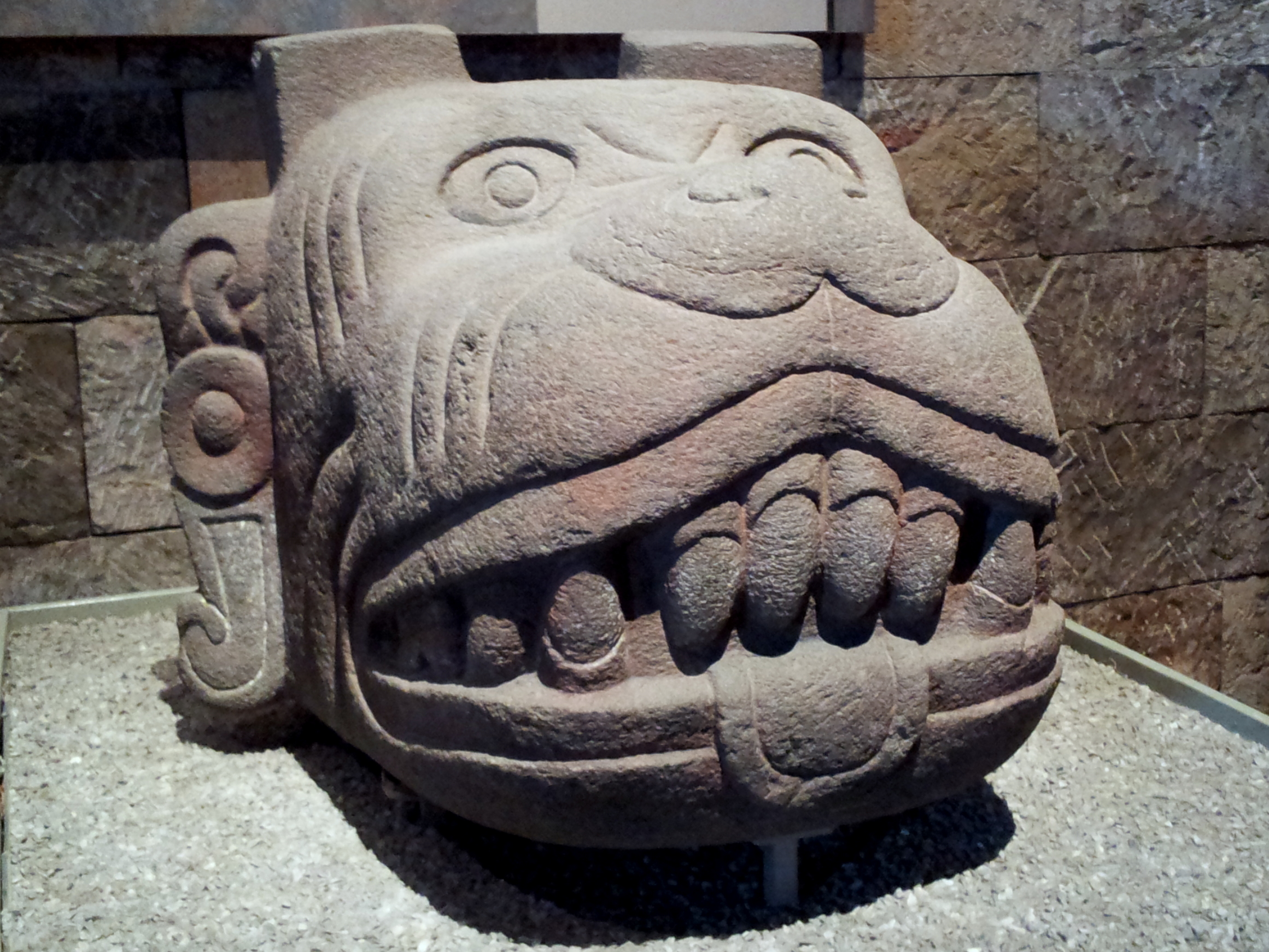
Face the god of death... I mean 
The Black Mudpuppy is a action comedy webcomic written by Ethan Kocak. The first question you might have when you read the title of this webcomic, is "what the hey is a black mudpuppy." Well a mudpuppy is a type of salamander. The same type of critter that the protagonist Xolotl, the crazy god of death, is imprisoned in by another god Quetzalcoatl, for blowing up goats and terrorizing villagers. Now imprisoned in that form he terrorizes local small wildlife for 500 years until Quetzalcoatl offers him an ultimatum, be good and slowly he can regain his godhood.


Now as the Black Mudpuppy, Xolotl muddies his way through trying to perform good deeds while accidentally destroying charity buildings. The book is filled with such amusing ADHD antics that might remind you of some gems in the 90s, like the Warner Brothers and Freakazoid. While it starts off slow investing in the book is well worth it as its curve balls are sure to make the sternest person chuckle. To give you an idea some of the highlights; there is a brawl between a couple of dinosaurs from hell Stego-Stalin fighting Hitlersaurus Rex. Another nemesis is the evil anti-Ghandi whose passive aggresivism will leave you very upset!


Make my monster GROW!!!
The book slowly evolves from a bunch of gags to a more meaty storyline that is seasoned with bits of Aztec mythology and characters from those same tales, and truly challenging the english speaker in pronouncing something wholly different.


The artwork too takes a bit of warming up to. While rough at first the ink work begins to take on a liveliness and dynamism that resembles books like Bone and the colors go from a flat to dynamic lighting. Additionally the character designs, influenced again from Aztecian designs culture are refreshing and interesting. T
hey are so simple and visually inviting, as too often I think people think detail makes a dynamic and eyecatching spectacle.

The fresh injection of Aztec stylings and the clean cartoon asthetic make Black Mudpuppy a great tale to enjoy. My only regret is that there isn't an animated series yet...

Listen chumblenuts, Sir Thomas J. Griffin is a force to reckon with, as he is the god of gingers trapped in a speckled body creating work like Frankenstein vs. Dracula for Gryphon Knights Comics. 

Friday, April 17, 2015

The Daunting Comic Convention: Making the Sale

The last part of this series I talked about a hard seller. It was my feeling that hard selling is a broken method for a few reasons. Foremost was a quote from our neighbor at the last con "When people buy from me I love them, when they don't I hate them." Its treating people as a resource that you tap into and then throw out when its dry. Among this terrible perspective are a few other things that make hard selling simply terrible:

Fighting a hard seller.

  1. Hard selling often works on pressure shame and guilt; these are the same things that have made Church so unpopular over the centuries. It pushes consumers away and doesn't invite people into your work, in addition most people are at conventions to enjoy themselves, not be slammed as "Bad parents" because they didn't buy their kids a book on comic history (True Story).
  2. While there is not anything wrong with grabbing peoples attention, screaming at them and insulting them to pressure them to buy is counter intuitive. It works on a flawed concept. Pressuring people to buy comic book entertainment at a convention is yelling at a person in a grocery store to buy food when they are hungry. Screaming at them tends to just make them feel uncomfortable.
  3. Finally you end up making yourself a Pariah; fellow sellers are going to not want a table near you, or want to work with you. You've made a name for yourself, but a bad one, and angry people who are losing sales because of you, then complaining to the convention managers could eventually get you banned from cons.
All this nonsense ends up alienating everyone! There are better ways, and they start with making a connection. Talking with people at cons might seem distracting to the major Ferengian goal of profit, but creating an impression is more important even than direct gain. The other gentleman made an impression, but it was a bad one-When a person talks badly about an experience they had at a store its likely to make them never visit the store again, its likely to make the listener choose to never visit that store, or even if they had visited the establishment to rethink their visit next time.That's why impressions are so vital; creating positive ones make people talk and advertise for you. 

Additionally making a connection makes them invest in you as a person. It will more than likely visit your table at the next con, and make them consider buying or setting a certain amount aside to buy from you next time. 

That is why I try to help people see beyond the direct buy or die relationships some salespeople have with their consumers. Its much longer term, and an impression made now can help you further down the line as you are adding to, if not your consumer base, then your fan base. Where the alternative is slowly burning one person at a time which will result in a dwindling pool of potential consumers and investors.

In the conversation you have with them you need to assess their interests. Ask them questions, like what genres do they like, or even subtler what movies do they enjoy. If they are into mystery and all you have is sci-fi... well then its likely they won't be personally interested, however you should tell them about your product anyway, because their 3rd cousin's sister's best friend might LOVE sci-fi, and need to have it. When you are engaging with someone its not just them, but their entire network!

If they do seem interested though you shouldn't sit there silently and wait for them to say "I'll take it!" Instead after talking with them and garnering what their interests are ask them if they would like to buy! Its as simple as that! Especially if you think they would love your book! Additionally you can offer other incentives like a free small sketch perhaps even in the book that makes the book unique and gives it more intrinsic value.

Gotta have that sales
 knock out punch!
One last thought I will leave you with. You need to have a concise summary of what your work is. Going on a long schpiel and telling people spoilers to try to get them interested can result in them losing focus. Greasers in Greece while not our strongest artistic piece always piques peoples interest. Especially when our summary of the book is "what happens when you put Grease and Sparticus together" or "what Grease would be like if it was directed by Zac Snyder." Simple one sentence summaries can really boost peoples interest, work on them and have them ready for a con!

Now go... Sell my minions!


You can only slighty trust Sir Thomas J. Griffin as he is a ginger and will try to consume your soul. He will then turn your essence into paint, from which he creates comic covers like those for Greenpoint of view and other works for Gryphon Knights Comics.


Thursday, April 16, 2015

The Daunting Comic Convention: Neighbors

Conventions are always filled with many characters! 
Neighbors... They can be amazing, sharing a spoon of sugar, a cup of salt. Or they can blast R&B music at 4am during the work week. They truly can make life hell.

In the case of conventions especially when you are just starting out its good to find people to share tables with. This can help cut costs and help your table appear full if you still only have a limited amount of product. The right person can also help you engage your audience and customers, as well as share their convention experience with you, for example providing insight on what are good events to attend as well as what the audience is like at those events.

To find people to table with you can attend a convention yourself, and search around. If when talking with someone at a table you gel well you might consider requesting to share a table with them in the future. Additionally you might want to share a table with someone whose content is different from your own. For example two people sharing a table that each have their own noir stories might cause a bit of redundancy, and end up unintentionally cutting out sales for the other.


A hard seller can be a bit threatening
and intimidating
At a convention its not just table partners that can depend on your success its also neighboring and nearby tables. These neighbors can either make or break your success as a salesperson. We've been fortunate to have had really good neighbors. The Barbarian Brothers, Henchgirl, Monster Haiku, Immortal Lycanthropes; these have all been amazing people to meet, and work near, even share a table with. People like these create a great atmosphere and help engage with the community of convention goers. However, everyone is not the salt of the earth like these. Recently however we attended a convention were our direct neighbor was a hard sell.


Hard sellers are individuals who use any method at their disposal to get people to buy. From spouting
the merits of their work to all out guilt and shaming anything goes with a hard seller. Our table mate
at this convention had this to say about our hardselling neighbor:

                     "The guy at the table next to us at East Coast Comicon was a real 
                hard sell guy -- he literally demanded a customer go out and prostitute
                himself to make enough money to afford the wares he was selling.
                Presumably he was joking. But he wasn't joking when he demanded that 
                people who already owned his book give it away to "a worthy friend" and 
                buy another copy RIGHT NOW. "Be a man! Be a man!" he screamed at 
                people who would not buy, as they slunk away from his table."

Its hard to do anything in this situation. You can't reprimand them or lambaste them as it only creates an escalating conflict. In addition to these comments the gentleman wreaked of weed and the smell and his shaming would have people steer clear of him, this included avoiding that section which included our table. In the end we did the best we could in light of the circumstances, but this is reality. You will always encounter individuals who tend to alienate people for their gain.


Our own belief in salesmanship is a bit different than this character but we'll cover that next week in "Making the Sale."

Sir Gryphon is trying to sell people on edible chia pets, and Frankenstein vs. Dracula with Gryphon Knights Comics. Please patron to help these visions come to light and for blog content to continue!

Tuesday, April 14, 2015

The Daunting Comic Convention: The right convention.

Being an artist is tough, one of the difficulties is garnering an audience. Some are wizards at networking or social media, others not at times it may seem impossible to make dough, even elicit attention for your work. One sure way to garner the attention you need is having a table at a convention, and putting up a sign that says free candy. That's the way to reel'em in... BAIT!

Candy won't be enough if you don't have sufficient content to litter your table with. Having a book or two out even having some free swag or other extras like posters and stickers for sale will help you sell. Not everyone wants the same thing so having diverse merchandise is more certain to earn a sale. "Don't just hit up any convention!" He warned earnestly, as going big or going home can be soul crushing in this industry.

NY Comic Con might be your initial thought. It's one of the best promoted and largest conventions, touting an amount of traffic that would have the BQE jealous. They have an artist's alley for those newbies. Still the table costs are outrageous and your sales skills might be crushed under the pressure of breaking even over the long weekend.

It might be easier to start with cheaper cons like the Garden State Comicfest. At 150 bucks for two days its harder to lose out. Sometimes you can even find smaller inexpensive 1 day events like the recent con in Queens, First Con-tact. These are good testing grounds for what sells, though every convention is a bit different: sketchcards, indie comics, prints, toys, stickers, and anything else your twisted mind can conjure depends on the convention. Over time regularly attending a show can help you learn the audience better and adapt your skills.

In addition certain shows like the one in Boston seem to have attendees with deeper pockets who are into dropping fives for random memorabilia like stickers, or trading cards.

Other things that can help or hinder you at cons could be splitting a table with someone... But we'll talk about that in our next blog about conventions called "Neighbors"

The entity known as Sir Tom Gryphon is at a table in the dark waiting to throw goods onto passerbys for Gryphon Knights Comics. Some of these goods are books he's illustrated like HERO and WOW Signal and lettering books like Getting Away with Murder.

Tuesday, April 7, 2015

SASB: Artists Are Like Drummers


When Gryphon Knights first got their start around 2011 it was fueled by dreams and idealism. It was this tingling excitement that drew almost 2 dozen people to the company for that very first meeting. However after many shared what their hopes and vision for this group would be, it became quite evident that at the time we didn't have the organization resources or the manpower to bring to fruition the fictional universe we imagined. In the end many lost steam and it wasn't until a few years later that things kicked off again and we started small.

However, in all that ruckus one thing stood out. It was very difficult to find artists.   
Moral of the Story: Dreams and Idealism is bad fuel
Not that they were impossible to find, but it was gaining the talent of an artist and then retaining them, a process that was made daunting for 3 reasons:

1) THE MONEY: It was difficult finding an artist who would work for a percentage of the profits of a produced work. At the time that's all we could promise people as any assets were fueling the company. This is not an unreasonable thing when you garner a little bit of cynicism and actually see how many comic book projects are out there. It can be daunting putting in the amount of work for you to succeed, and often you have to have multiple releases before you get any attention at all. Additionally we were just starting, its hard to garner attention when all you can promise someone is a percentage of potential. Many artists would be happy simply to have the exposure, but again we were a no name company at the time, so our exposure was 10 people (including mom, dad, and the dog)!

2) RELIABILITY: Even if you do end up finding someone that's willing to work for a promise of glory its often a cointoss whether they are consistent or just blowing steam. Actually its more like a dodecahedron toss that has to land on 4 whether they are consistent. Even finding an artist it can be difficult for them to follow through. This could be because they are occupied with too many other life tasks or responsibilities or it could be they are just flaky. George once said "To get anywhere you have to be stupid and just love creating, because most of the time it won't take off." Another friend of mine who is a graduate from SVA and writes for a living said to me that she only knows two other people who graduated with her that are actually working in an artistic field. Its tough and to do it you just need to love doing it.

3) DIVERGENCE OF VISION: So you have someone working with you and they are fantastic. They make deadlines, they are consistently creating and investing in the work but suddenly you hit a roadblock. They don't like your story, or they think something needs to be different. That's the problem when someone is working for free: They get emotionally involved in the storytelling, because that is the thing they are most invested in. How many times do you hear people parting over creative differences? Well its not much different when there is no money involved, there is just no press about it. That's why sometimes people will have contracts at the beginning  so they can retain sole creative rights over a project.

So what do I do?

Well my friend, if you keep hitting blockades in trying to build a creative team, the only thing you can do is keep putting your work out there, telling people your stories, and one day you might meet someone that says "Wow... I'd really like to draw that."

If it kind of sounds a lot like dating it is. You really have to meet a variety of people to find a compatible creative team that shares a passion, drive, and vision with you. You can meet artists by joining clubs, going to conventions, or even find a bunch at www.deviantart.com. Another thing I found is if an artist's ability is still unrefined, but they are a beast at consistently producing work, you want them! If someone is consistently creating there is no way they won't improve, especially if they are open to critique, and they will appreciate the chance to work on something (Sounds kinda like the plotline of strictly ballroom).

Another way finding a good artist is like dating... If you have money, it becomes easier.

Sir Thomas J. Griffin is an artist and reluctant writer that has had nothing but maggoty bread for three stinking days. He has been too busy creating books like WOW Signal for GRYPHON KNIGHTS COMICS to go shopping.

Sunday, April 5, 2015

Webcomic Review: Henchgirl


Henchgirl is a webcomic, created by Kristen Gudsnuk. The main character Mary Posa is the black sheep of her family, lovelorn, and unable to get a legitimate job even at the dankest restaurant. These circumstances bring our... er... "hero, " into the sordid arms of a crime syndicate in a metropolis called Crepe City. Mary then becomes the ever adorable Henchgirl! Meanwhile she tries to bring resolution to her esoteric ails all while surviving and trying to be not too evil.

Those MEAN STREETS!
Henchgirl is refreshingly not a "strong" female protagonist, at least not in the current traditional sense. In a world where female characters seem to have been homogenized into badass martial arts killing machines, absent of personality, Mary Posa is different. She is rich in character whose struggles are empathetic to both sexes. Her true strength is in her determination to move forward in spite of depressingly frustrated ideals. One of my favorite scenes of her trying to overcome, is when she discovered a super powered friend shattered. Taking each of their pieces she painstakingly puts them together with simple things like tape and super glue in hopes that it might restore them.

This scene is reminiscent of a few others throughout the book in a theme that seems to recur in people trying to put others, themselves or things back together; a hope to restore. A powerful inclination that echoes the original theme of persevering.

Well I think its adorable
And while many parts of the book are dark for such a bright character there are many hilarious memorable moments. Such as Mary's roomate whose only ability is to create an army of carrots out of her skin. Not giant carrots, just regular sized carrots... out... of... her... skin...

While her influences are evident of certain anime influences her art style is reminiscent of Bryan Lee O'Malley's, while remaining distinctly her own. A feat she accomplishes through the diverse textures of color she uses throughout the book. However one of the things I feel was recently lost was the progression the creator made over the course of its creation, by beginning to remake the earlier pages of her story to be comparative of her current work.

While "Lucasing" has become more common in the arts, and while her newer pages look excellent, I almost wish that both versions of her vision was available. I myself am a victim of being dissatisfied with earlier work and trying to bring some sort of resolution to it by modifying or remaking it, but by doing so perhaps I am erasing something in the history of creation.

Creative politics aside the twisted tale of the Henchgirl is a great summary of our generation as we are all a bit lost looking for something meaningful, while we are rejected from large chains because our fancy degrees tend to make us unwanted in those positions. Its speckled with pertinent, and the bizarre; then perfectly balanced with a helping of conflict and puns that make this story claw its way into my brain, and heart.

Sir Thomas J. Gryphon is a bunny who has lost all his eggs working for Gryphon Knights Comics on wacky books like "Meanwhile..."

Monday, March 30, 2015

SASB: Death of the Superfan: Part 1

You haven't been back home in a while. You moved out to the city for work and have gotten used to the Thai food, the busyness, and a new local comic shop where you make regular visits for the latest "Saga" and "Resident Alien." But now because your little sister graduated, you're in your hometown, and decided to check out the comic store that's near your parents' house. You stand outside and you recall what your first time here was like...

You had the hawkish owner/ manager (you're still not clear) who greeted you at the door. He wore glasses, a tucked-in, checkered, collar shirt and seemed like he wouldn't want to answer you're stupid questions. Scattered throughout the store  are isolated men, with the exception of the two engaged in a conversation over Warren Ellis's Planetary and a young couple, perhaps just really close friends, pawing and laughing over the latest X-men.
 And then there was Paul.
You mustered up the courage, and asked the manager where you can find the Doom Patrol comics. You were right; the manager didn't feel like answering you question, especially since he doesn't know what you are talking about. You started to describe it explaining that they were a team like the X-Men with a guy in wheelchair, similar to Professor X. 
"Actually, the Doom Patrol came before the X-Men, So really Professor X is like Niles Caulder, your "wheelchair guy." says Paul glancing up at you intently. His angry eyes above his hair filled cheeks, daring you to challenge his knowledge,
"Doom Patrol started in My Greatest Adventure #80, in June 1963, and X-Men started in September 1963," he continued unsolicited. "You shouldn't be reading it if you don't know about it..."
...

You enter the old, disheveled shop from that memory and you trip over something. You turn around and to your horror, it's the body of Paul, the former resident expert, with blood and  self-significance pouring out of an open wound.
Who? Who could have done this, you think, your mind quickly races towards the list of suspects.

To be continued... 


POOR PAUL!
Dimitrios Fragiskatos is an irate Greek who enjoys prodding speculators. You can read his work on titles like Greasers in Greece or Greasers in Geese, and his new series he has a bunch of artists locked in a room working on called Frankenstein vs. Dracula.

Sunday, March 29, 2015

Webcomic Review: Ava's Demon


When I review webcomics I try to see it from every sensory perspective, and I often relate experiences with consuming food. For example a good comic can linger in your mind, just as something flavorful might linger on your palate. I'm giving you a little bit of my insight because as a creator I believe in being open with my process, but I also have a challenging task ahead of me. 

Have you read Michelle Czajkowski's Ava's Demon yet? If you haven't I am now going to try to convince you that if you consider yourself a webcomic reader than you must. The challenge I was talking about previously was that I need to convince you that this work is a webcomic masterpiece, if not a masterpiece in itself! I know those are strong words to just throw around, however, I hope from my other reviews that you understand I don't use them lightly.

I was originally told about Michelle's work from a friend who works at blue sky and might be known for his work called Dollar Store Combines.

Being very busy in illustrating a variety of comics I was hesitant to start reading another since taking time for entertainment can be risky. Either you've wasted time starting something that was a bust, or (and this is the scarier possibility) you may lose time by becoming absorbed in binge reading because you can't get enough.

Ava's Demon ended up being the latter. You are welcomed to this webcomic by an eerie tomb that seems to glow hauntingly red. Opening it you see just one panel of a girl scribbling in a book. Its counter to what many comics or even webcomics do with their formatting. Pages that are landscape or portrait containing anywhere from 3-12 panels on average. Instead Ava's Demon's panel by panel format is more cinematic and is refreshing because it allows you to appreciate the beautifully painted image as a single piece before moving on. Many other comics paneling pushes a reader forward where Ava's asks you to linger. And linger you should, each panel is beautifully digitally painted and rendered, capturing the mood with its intense lighting, and whose cartoonishly styled characters powerfully emote to further draw you in. All this added to Ava being artistically beautiful but at the end of the first chapter is what captured me as an Ava fan! Each chapter concludes with an animation accompanied by music that truly leaves Ava as not just an amazing webcomic, but an excellent multimedia creation!

The first page of this  dynamic sci-fi introduces us to Ava, a girl we quickly find is highly disturbed, and her demon who seems to be a hidden personality that wants to snuff out the young girls life. It seems like a complex thing to convey but this aspect of the story isn't unfurled in the first five issues, or even the first five pages, but within the first five panels. This is typical of Ava's storytelling, as it conveys seamless storytelling that with its magnificent imagery, and as the story progresses we are found in a postwar universe whose conqueror is heralded as a god. Just the information I shared makes the story address issues of a person resolving their inner demons as well as bringing up the concept that our history and our gods tend to be those of our conquerors.

With two books already published and a third on the way, Ava's Demon seems to be on the crux of being the next legendary space opera! You can help her continue to create by donating to her Patreon!

Sir Thomas J. Griffin is a son of Lilith working for Gryphon Knights Comics and is currently exercising his demons by illustrating an anthology called Frankenstein vs. Dracula: Throughout the Ages with 11 other talented people!

Monday, December 22, 2014

Keeping Your Soul in Creating, Part 1: Comics


            There has always been one taboo in the art community, a taboo that is universally criticized, and longed for; "Selling out." No one wants to be a sell out, but to continue to support a career of creativity, and live comfortably its often the direction one has to take. Selling out usually involves an artist trading off a creative property or properties for their monetary benefit, and usually losing partial or all control over that property. The stereotypical opinion in taking this action is that the property lore can be watered down its story can be twisted and characters can become diluted or warped by its new owners. While this has happened, and I feel is evident in film or remakes like the Great Gatsby it is not always the case. With the rise of the webcomic and crowdfunding there are more individual contributors and fewer middle-men with overarching creative and financial control over artistic ventures. So is "selling out" going the way of the dinosaur?

            I've been given a chance to do a quick Q&A with Vas Littlecrow on her thoughts about this topic, whether its good, bad, or if there is some middle ground. Vas is an out-of-the-box thinker, and underground supporter of the indie artist and webcomic community, who is heavily inspired by Russian culture and history. She created a multimedia comic-based arts collective, which started in 2006 with the launch of her webcomic called Rasputin Catamite (*WARNING This comic contains. content that is not suitible for all audiences & may be NSFW*) The book is a dark comedy that takes place during the fall of the Soviet Union. One of her comrades and collaborators is Ram Lama, whose webcomic, Dark River, I've reviewed in a previous blog post.

Q: Tell us more about your company?

There is no company, actually. I don't do corporate. The idea of giving life to an artificial entity whose sole purpose is to make profit at the expense of everything else, including human life, offends me. The non-profit corporate structure also strikes me as problematic, so I avoid that as well. This is why I run a sole proprietorship known as VAS Littlecrow. Velvet Rasputin is merely its most visible department.

Q: Tell us more about your Velvet Rasputin; what was your mission statement at the start? Has it evolved at all since then?

Originally it was, "FUCK ART!" I mostly have an adversarial attitude towards mainstream art, its mindless slavery to fashion, its rejection of historical curiosity, and its ridiculous snobbery. I still do. Over time, I modified Velvet Rasputin's mission statement to say, "We battle against evil empires through the power of intellectual and spiritual curiosity." It means the same thing, but in a more passive aggressive sort of way. Apparently, its easier to get art funding, if you pretend to give a shit about other people's opinion while avoiding swear words.

Q: Could you go into detail about your current projects and the artwork you are creating.

Right now, the biggest priority for me is Rasputin Catamite since, the Aston/Nicholls studio kindly took over Rasputin Barxotka for the time being. 

Rasputin Catamite is a multidisciplinary project, cleverly disguised as a webcomic. Rasputin Catamite started out as an inside joke about Napoleon Dynamite between project alumna, Caylie Dean, and I. It was supposed to be a throwaway seven-day spin-off from one of my print comics. To everyone's surprise, it has grown into so much more.

Rasputin Catamite is mostly a metaphorical autobiography mashed up with my concerns about the world. Everything actually represents something else, but still comes across as a straightforward dark comedy about young Russian misfits growing up during the death throes of the Soviet Union. The story is meticulously crafted to make the reader feel the emotions that inspired a lot of the imagery, so it's an uncomfortable story by design. I am the creative director and lead writer for the project. Ram is the lead artist for the comic. Studio A.d.H.D heads special projects. Loki Kaspari works behind the scenes as the editor. There is a musical element known as Upir's Mark featuring fellow songwriter, slaveboy thom s.R. wolfox, fellow musician, Narphy La Mancha, with a little assistance from Thibault Kervarech. Flavin works as the current puppetmaster, and is preparing for the day when we will be able to tour as a stage entity once again. It's not happening anytime soon, but it will happen. The end game will be an animated horror musical, if the best case scenario decides to materialize.  If not, we'll have a beautiful glorified storyboard with a neat soundtrack.

Q: What does selling out mean to you?

The willingness to compromise on one's creative vision when dealing with a personally meaningful project. It is also the idea that one has to be a slave to artistic fashion, or violate one's own principles, in order to be a "real" artist. It has nothing to do with money for me. A sell out creates art that speaks to a focus group. An artist bares the soul, money or not, but the creations are better when starvation is not involved.

As a former punk who is still a musician, I have no shame in admitting that Henry Rollins had a huge influence on me regarding this philosophy of creative integrity.

Q: Have you ever sold an artistic work and regretted it?

No. Art is more useful feeding me and the crew while bringing someone else joy, than sitting in my studio. Physical possessions are less important than the happiness of human beings. The moment you elevate art above humanity, is the moment you start to lose sight of why art matters to the human condition.

Q: In social media discussions you seem to be averse to giving up your intellectual property for a profit. Why is that?

I have absolutely no problem giving up my intellectual property for a profit at all.  If someone paid me $40,000,000 for Rasputin Catamite right now, I will conclude it, make the movie my way, turn the rights over to its new owners and split the profits among all the project participants based upon their involvement. With the remaining proceeds, then I will reinvest a considerable portion of it, and create something even more ambitious and personally meaningful. 

The price I ask for art depends on how attached I am to project, and how much a client is willing to pay me. Hell, if I make a caricature at an art festival, I will sell that intellectual property for $25.00 along with the paper it was drawn on, because it's not worth anything to me. If you don't share your art, it's completely useless as art. As slaveboy thom once told me, "How could someone be an artist if  the art isn't shown to anyone?" If people are willing to pay for you undiluted vision, that's the ultimate compliment

What I have a problem with is people being ripped-off by intellectual property poachers and opportunists who promise the universe and only deliver residuals, if anything at all. Product and money should never matter more than people, and if you are going to demand someone else's creative control, the least you can do is be honest about it. This is why I stopped using student interns. It made me sick to stomach when looked at myself in the mirror to know that I was exploiting people in such a way. It's immoral to me. 

At this time, the team isn't paid as well as I'd like them to be, but what I promise them is exactly what they get. The only time I don't pay, is if someone volunteers to help without me asking for it. I accept such a donation as a gift and an honor.

Q: Is there any point you would sell a creation of yours?

You can go to the Amazon.com Kindle Shop right now and buy eBooks based on my properties, at this very moment. I used to be a graphic designer and a caricature artist, so I did it all the time. Selling my creations is what helped me escape prostitution and starvation when I hit rock bottom.  I still have abstract art prints and fabric designs available for sale all over the place online.  Even an idea can be worth money. Just because I don't sell out, I doesn't mean that I won't sell. I wouldn't be where I am today if I didn't.

Q: Have you ever created something as a product solely to sell, that you weren't very attached to?

Since age eight, and I haven't really stopped since. I don't get attached to finished art. This is why I burn most of my sketches.

Q: Do you think anything is lost when a person gives up partial or complete creative rights to their property to a larger entity or institution?

Control of the vision. Nothing more, and nothing less. If you have a great contract, solid people and, sufficient compensation, the process of selling creative rights feels downright painless to me.  

Having said that, the same is true for individuals and small entities. In fact, some of the egregious and spectacular screw overs that I've ever experienced in my life in regards to the arts, happened because I split project copyrights with collaborators. As a result, I do not share intellectual property rights for my comics anymore, unless it's a crossover project. My collaborators may have my comic characters and stories over my cold dead body, which is why I am contractually obligated to keep them named in my will.

Q: Is there ever a point where giving up an artistic piece is beneficial or necessary for the creator?

Yes. When it feels right, and the other party is honest about their intentions.

Q: Do you value any project over another?

If it wears the Velvet Rasputin label, it's probably my baby and very special.  All Velvet Rasputin projects are interconnected.

Q: How have webcomics changed the comics scene, in your opinion?

It has obliterated practically all entry barriers to publishing comics.  As a content delivery method, the Internet is absolutely great.  It truly made comics a lot more diverse and interesting. It's especially wonderful for underground stuff.  I love it.  Unfortunately, the indie comics community has gotten a lot more competitive and less like a community, and there are a lot more sub-niches than ever before. Comic conventions now are more like pop-culture promotion events. It's very different than it was back in the late 80's and 90's, and I am not sure that I get it all that well. That's why I am semi-retired now.

Q: Mainstream companies have tried to revolutionize comics numerous times, with digital comic; moving comics, which are similar to the Marvel cartoons of the 60's and having mobile smart phones which can interact with the comic to expand the story. Do you think any of these are truly innovative? What do you think the next revolution of comics will be?


The future of comics are gaming, movies and videos. These formats are better suited for mobile devices the represent the future of computing. If Marvel had not had such spectacular success with blockbusters in the last few years, print comics would already be extinct as a form of mass entertainment. Ad-based webcomics have pretty much self-destroyed as an economic engine, for the most part, even if they aren't going anywhere. If it weren't for crowdsourcing and patronage, almost no one would be making money on webcomics at all. Comics are a semi-obsolete technology, but one that is full of historical significance and accessibility for those who don't have the resources to engage in other creative disciplines. As comic artists we should shift our focus away from the newest gimmick to keep comics relevant, and towards the long-term preservation of the art form and its role as a social muse. A world without comics would be a very sad one, and I think that we need to teach young people that this art form is worthy of existing for generations to come.

Sunday, November 23, 2014

Webcomic Review: Wish³

The comic Wish³, by Sylvia T. Leung, is a 400+ page complete webcomic manga. That's right, you could sit down right now and read the book from start to finish! Heck, you can even order the volumes online right now from the same place we sell Greasers, on Lulu.com!

I started reading the book after I graduated high school and it wasn't finished until I had graduated college. I'd check back religiously because there weren't too many cheap sources of entertainment for a student in New York other than Web-comics.

This book starts off with Basil Toback, who is turning 18, eavesdropping on his family. He finds out  the 3rd born of any generation of his lineage is cursed to be the wielder of  three wishes. It is a curse because after the 3rd wish is made the wielder goes insane and dies. Unfortunately, Basil also finds out his family intends to use the wishes themselves with no regards to Basil. Eluding his family he begins a long quest to bring an end to this curse. His journey pulls him through other dimensions and peering back in time to the wishers of ages passed, finding allies, and strange enemies alike.

I really enjoyed Wish³; it captures the feeling of any one who just turns 18. That age brings with it a lot of harsh realities. like the struggle for independence, and finding a purpose. Watching Basil work through these struggles was reflective and cathartic for me. It also encapsulates a lot of interesting aspects of Japanese style and culture.

The supporting cast really stand on there own. Many times the supporting cast become so overshadowed by a lead that they become little more than plot devices, something I like to call "Goku Syndrome." Wish's cast really works, because, while the focus is on breaking Basil's curse, they have their own dilemma's they are facing.

Seeing this work come together before my eyes was really invigorating for my own creativity. I watched the artwork evolve from inks with pencil shading, to grayscale, to full color. It was really remarkable to see Leung's improvement over time, and how the layout and details in her work became more polished. Watching the production and how it comes together is like a bonus form of entertainment for following webcomics.


This style of artwork is a bit underwhelming as it is similar to many other artists who have had manga influences on their work. Even still the story is really beautifully rendered, and action is conveyed creatively. At times, you can get lost in the panels and feel like you need to reread a page to take it all in. Additionally, Sylvia proves herself a master of Prismacolor, her marker brand of choice that is infamous for bleeding a lot. In the age of  the web-comics, most done digitally, it is impressive she crafted this book with analog tools like pen, ink, marker, and watercolor.

Sylvia herself was always quick and open to questions, and sharing her methods. The website is full of concept art and behind the scenes information. She seemed to network very well as we see covers by guest artists like Christopher Berkeley, who worked in the animation departments on the animated Green Lantern, and BATMAN: Under the Red Hood.

I recommend this book to everyone, but especially to fans of anime like Blue Seed, or books like Harry Potter!


Sir Thomas J. Griffin is an artist and anime caricature working for GryphonKnights Comics. He's illustrated books like Greasers in Geese , Hero, and The Only Choice.

For any who enjoyed Wish³ I'd recommend reading GryphonKnights's own coming of age story,  Greasers in GREECE!

Saturday, November 15, 2014

Webcomic Review: Calachurras


Jesus and Angel Delgado understatingly summarize their webcomic Calachurras as "a few three-arm guys, a beach and a very strange battle."

You are welcomed into this world in a first person POV through the eyes of a churra. The plot is cleanly laid out by one of the leaders of the clan (or Misters) that their clan's purpose is to battle a rival clan, and defeat them before the great wave comes and destroys them all.

You quickly garner the concepts in this society by their castes and jobs. Following two of the Misters, Mr. Future and Mr. Maker you become drawn into the urgency and the innovation they are trying to execute so that their tribe may survive.

Things aren't easy though as they quickly encounter red tape, and taboos which pepper this culture and makes for amazing parody & commentary on religion & politics. This satire while silly strikes very close to home for anyone who has dealt with a system.

The art captures one's attention right away. It has beautiful simple landscapes and in its simplicity immediately reminds me of the works of Jeff Smith (the creator of Bone) or Lewis Trondheim. The Brothers Delgado allow the time of day to affect their characters, fully immersing them into this world, a detail which many forget to do. The lighting plays off their civilization indicating the passage of time, as well as ticking down to the oncoming battle, and creating a sense of urgency that continues to draw the reader in.

In most webcomics you see the art evolving or improving over time, but this book has a consistent look throughout its first arc, a nice feature (although I do find see the evolution of an artist's style entertaining.)

The pacing in this book is amazing, the art and dialogue work in tandem to create a time bubble that races you through this story, but leave you wishing for another tome in this epic.

I would encourage anyone to step into the... grabbers of these churras, and experience the difficult battle and complex war they are engaged in. 

Sir Thomas J. Griffin is an artist and acloyte of Chaos Magick working for GryphonKnights Comics. He's illustrated books like Greasers in Geese , Hero, and The Only Choice.

For readers who enjoyed Calachurras I'd recommend reading GryphonKnights's Frankenstein Vs. Dracula!